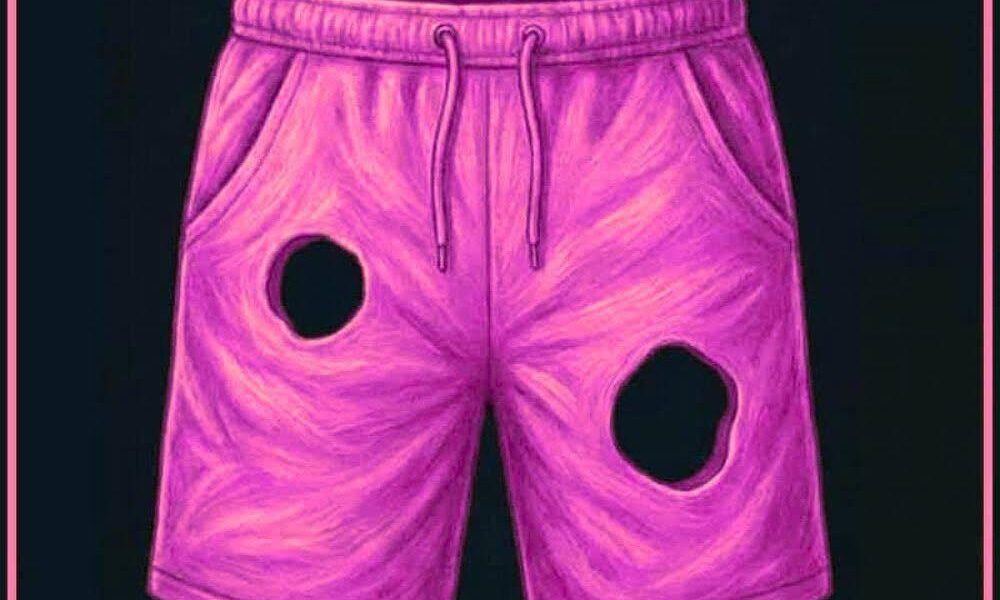
People who stop after noticing the most obvious openings often rely on quick visual processing.
You may prefer making decisions efficiently rather than analyzing every possibility.
This doesn’t mean you’re careless.
It simply suggests you’re comfortable trusting your first impression.
In everyday life, that can be an advantage when quick decisions are necessary.
The downside?
Occasionally overlooking small details.
If You Counted Five Holes…
You may naturally pay close attention to structure.
Rather than accepting the first answer, you probably examined the image carefully.
You enjoy solving problems methodically.
Friends may describe you as practical and analytical.
You tend to gather information before making decisions.
If You Counted Seven or More…
Some people mentally visualize the shorts as a three-dimensional object.
Instead of looking only at the front, they imagine how each tear passes through both layers of fabric.
This style of thinking often involves spatial reasoning.
Engineers, designers, architects, mechanics, and puzzle enthusiasts sometimes approach visual challenges this way.
That doesn’t mean everyone with these careers sees the same answer—or vice versa.
It simply illustrates another way of processing information.
Why Our Brains Interpret Images Differently
Human perception is surprisingly flexible.
When we look at an image, our brains don’t merely record information like a camera.
Instead, they interpret it.
This interpretation depends on many factors, including:
- Experience
- Expectations
- Attention
- Visual habits
- Context
That’s why two people can look at the same picture and notice completely different details.
Optical Illusions and Perception
The shorts puzzle belongs to a larger family of visual challenges.
Other popular examples include:
- Hidden animals
- Rotating silhouettes
- Impossible objects
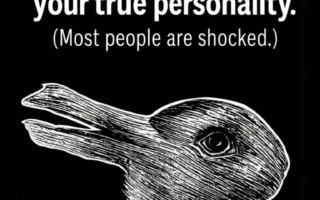
- Face-or-vase illusions
- Color perception puzzles
These images demonstrate how the brain fills in missing information.
They’re fascinating because they remind us that perception isn’t always objective.
What Is Narcissism?
Because the puzzle mentions narcissism, it’s worth understanding what the term actually means.
In psychology, narcissism exists along a spectrum.
Many people occasionally display narcissistic traits, such as enjoying praise or feeling proud of accomplishments.
That alone doesn’t indicate a personality disorder.
Narcissistic Personality Disorder (NPD) is a recognized mental health condition involving persistent patterns of:
- Grandiosity
- Excessive need for admiration
- Limited empathy
- Difficulty accepting criticism
- Exploitative relationships
Diagnosis requires careful assessment by qualified mental health professionals.
No image or internet quiz can determine whether someone has NPD.
Why Personality Quizzes Feel Accurate
Many online quizzes seem surprisingly convincing.
One reason is something psychologists call the Barnum effect.
This describes people’s tendency to recognize themselves in broad descriptions that could apply to many individuals.
Statements like:
- “You sometimes overthink.”
- “You enjoy being appreciated.”
- “You value honesty.”
feel highly personal even though they describe most people.
This doesn’t make the quiz scientific.
It simply reflects how our minds naturally search for meaning.
The Real Lesson Behind the Puzzle
Perhaps the most interesting aspect of the shorts puzzle isn’t the answer.
It’s watching how different people explain their reasoning.
Some focus on appearance.
Others think structurally.
Some debate definitions.
Others question the wording itself.
Each approach reveals something about how people solve problems.
Not about their personality—but about their thinking process in that particular moment.
Why These Puzzles Are So Popular
Visual challenges continue to dominate social media because they’re:
- Easy to understand
- Quick to complete
- Fun to debate
- Suitable for all ages
- Naturally shareable
Unlike traditional quizzes, they create immediate interaction.
Everyone wants to know whether others saw the same thing.
Final Thoughts
The “How many holes do you see?” puzzle is an entertaining reminder that perception isn’t always straightforward.
Different answers often result from different interpretations rather than right or wrong thinking.
Most importantly, the puzzle cannot determine whether someone is narcissistic—or reveal their personality with any scientific accuracy.
Instead, it offers something far more enjoyable: an opportunity to see how differently people observe the same image and to appreciate the many ways our brains process visual information.
So…
How many holes did you count?
Whether your answer was four, five, seven, or something else entirely, the real fun isn’t proving who’s right.
It’s discovering just how differently people can look at exactly the same picture.