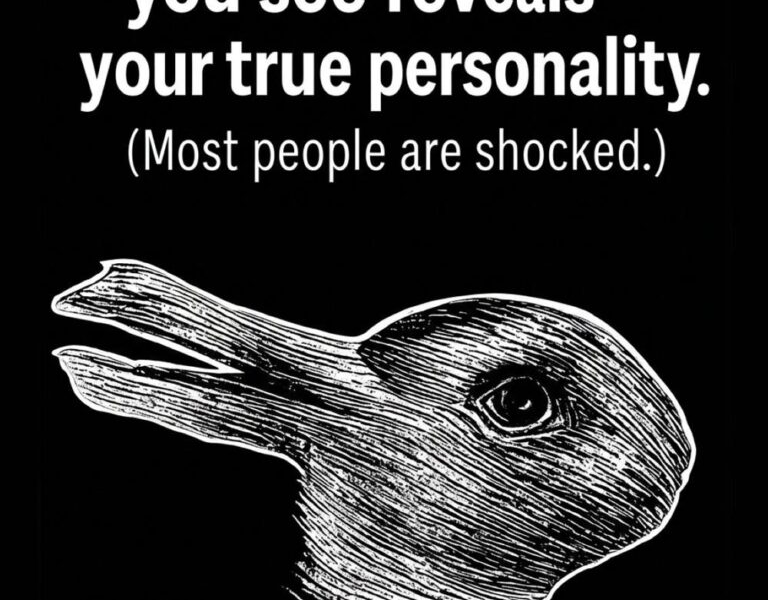


Have you ever looked at an image with someone else and realized you each noticed something completely different first?
Moments like that remind us how personal human perception really is. Even when two people observe the exact same picture, their brains may prioritize entirely different shapes, patterns, or details within seconds.
What immediately stands out to one person may remain invisible to another — at least at first.
This happens because the brain constantly interprets visual information using:
- Past experiences
- Attention patterns
- Emotional associations
- Memory
- Cognitive habits
In many ways, people do not simply “see” the world objectively. The brain actively organizes and interprets what the eyes detect.
Why Optical Illusions Fascinate Us
Optical illusions are especially interesting because they reveal how quickly the brain tries to make sense of incomplete or ambiguous information.
When we look at an illusion:
- The brain searches for familiar shapes
- Attention focuses selectively
- The mind fills in missing information automatically
This process often happens before conscious thinking fully begins.
Psychologists who study visual perception explain that the brain constantly simplifies complex visual input to help people react quickly and efficiently. Illusions expose that process in real time.
That’s why people often feel surprised when someone points out a second image they completely missed initially.
Why People See Different Animals First
In animal-based optical illusions, multiple shapes are hidden inside one image.
Some people may immediately notice:
- A bird
- A rabbit
- A wolf
- A fish
- A horse
while others see something completely different.
The reason usually relates to how the brain prioritizes:
- Contrast
- Movement-like shapes
- Familiar forms
- Emotional relevance
- Visual focus areas
For example:
- A person drawn to large overall patterns may notice one animal first
- Someone more detail-oriented may identify a smaller hidden figure immediately
Neither interpretation is “wrong.” The brain is simply organizing visual information differently.
The Psychology Behind Split-Second Perception
The first thing someone notices in an image may reflect temporary mental focus rather than deep personality truths.
However, optical illusion tests remain popular because they encourage self-reflection and curiosity about human behavior.
Researchers in cognitive psychology often study:
- Selective attention
- Pattern recognition
- Visual processing
- Cognitive bias
These processes influence how individuals interpret images, environments, and even social situations.
The brain is constantly filtering information because processing every visual detail equally would overwhelm us mentally.
Attention Shapes What We Notice
One major factor in perception is selective attention.
Selective attention means the brain automatically prioritizes certain information while ignoring other details.
This is why:
- Some people notice faces immediately
- Others notice movement first
- Others focus on colors or structure
Our attention patterns are influenced by:
- Personality tendencies
- Current emotions
- Stress levels
- Interests
- Experience
For example, someone highly alert to danger may notice sharp or aggressive animal shapes faster than softer forms.
Why These Tests Feel “Shockingly Accurate”
Many optical illusion personality posts online use broad psychological descriptions that feel personally meaningful.
Psychologists sometimes call this the “Barnum effect” or “Forer effect.”
This happens when people strongly relate to vague statements that could apply to many individuals, especially when the statements involve:
- Emotions
- Relationships
- Ambition
- Insecurity
- Intuition
For example:
- “You care deeply but hide your emotions”
- “You value loyalty but dislike betrayal”
- “You are stronger than people realize”
These descriptions often feel accurate because they reflect common human experiences.
That does not mean the illusion scientifically revealed hidden truths about personality.
Still, Optical Illusions Can Reveal Interesting Tendencies
Even though these tests are not scientific personality evaluations, they can still highlight real aspects of perception and cognitive style.
For example:
- Detail-focused individuals may scan images differently
- Emotionally intuitive people may notice expressive shapes quickly
- Analytical thinkers may process structure before symbolism
Visual processing genuinely varies between individuals.
That variation is part of what makes illusions so engaging.
The Brain Loves Patterns
Humans are naturally pattern-seeking creatures.
Evolutionarily, quickly recognizing shapes and threats helped survival. The brain became highly efficient at:
- Identifying faces
- Detecting animals
- Recognizing movement
- Completing incomplete images
This is why people can often “see” meaningful images even in clouds, shadows, or abstract art.
The brain prefers interpretation over uncertainty.
Social Media and the Popularity of Illusion Tests
Optical illusion personality tests spread rapidly online because they combine:
- Curiosity
- Entertainment
- Self-reflection
- Surprise
- Social comparison
People enjoy asking:
“What did you see first?”
The conversation becomes interesting because everyone’s answer may differ.
These illusions also create a sense of mystery around ordinary perception, making people more aware of how differently human minds work.
What Your First Animal Might Symbolize
Many illusion posts attach symbolic meanings to specific animals.
For example:
- Wolves may symbolize independence
- Birds may symbolize freedom
- Rabbits may symbolize sensitivity
- Lions may symbolize leadership
These symbolic interpretations often come from cultural associations rather than scientific evidence.
Still, many people enjoy reflecting on why certain images emotionally resonate with them more strongly than others.
Can Optical Illusions Reveal Personality Scientifically?
Not reliably.
While visual perception is a real psychological process, most viral “what you see first” personality tests are designed mainly for entertainment.
A single image cannot accurately diagnose:
- Personality type
- Emotional traits
- Intelligence
- Future behavior
Professional personality assessment requires much more comprehensive psychological evaluation.
However, illusions can still spark meaningful self-reflection and conversations about perception, attention, and emotion.
The Deeper Message Behind Illusions
Perhaps the most fascinating thing about optical illusions is not the hidden animal itself — but what they reveal about human perspective.
Two people can look at the same image and experience it differently.
Just like:
- Two people can experience the same event differently
- Two people can remember the same conversation differently
- Two people can interpret the same situation differently
Perception is not purely objective.
Our minds constantly shape reality through attention, emotion, memory, and interpretation.
Final Thoughts
Optical illusions continue fascinating people because they sit at the intersection of psychology, art, and human curiosity.
They remind us that perception is deeply personal — influenced by the unique ways our brains process the world around us.
Whether you saw a wolf, bird, rabbit, or another hidden creature first, the illusion probably says less about destiny and more about the incredible complexity of human perception itself.
And perhaps that’s the real reason these images feel so captivating:
They quietly reveal that no two minds see the world in exactly the same way.