Because nail clippers are useful for more than nails alone, they are often included in:
- Travel bags
- Survival kits
- Camping gear
- First-aid kits
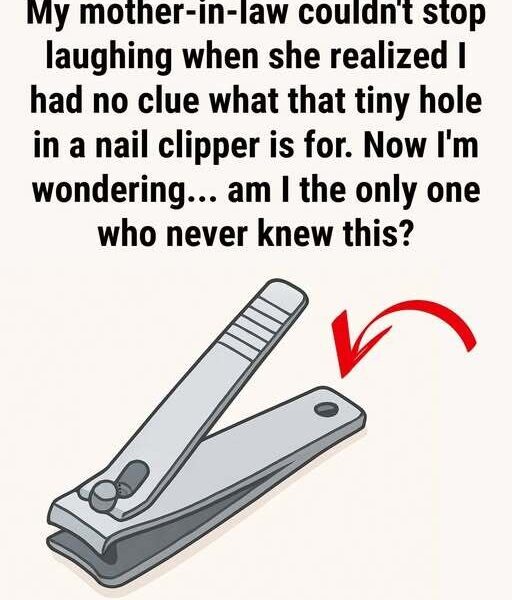
The attachment hole makes them easy to secure inside compact storage systems.
Some travelers attach them directly to backpacks or toiletry pouches for quick access.
The History of Nail Clipper Design
Modern nail clippers evolved from older grooming tools such as:
- Small scissors
- Folding blades
- Manual trimming instruments
The familiar lever-style clipper became popular because it offered:
- Simplicity
- Durability
- Mechanical efficiency
The lever mechanism multiplies pressure, allowing users to cut nails cleanly with minimal effort.
The small round hole eventually became a standard design element because it improved practicality without increasing manufacturing complexity significantly.
Why Simple Design Features Matter
Industrial design often focuses on solving everyday frustrations through tiny adjustments.
Good design is not always flashy or complicated.
Sometimes it involves:
- Making an object easier to carry
- Easier to store
- Easier to use
- Easier not to lose
The round hole on nail clippers is a good example of functional minimalism — a tiny feature that quietly improves the user experience.
Other Hidden Features on Nail Clippers
Many nail clippers contain additional features people rarely notice.
Depending on the model, these may include:
- Small nail files
- Cuticle pushers
- Built-in cleaners
- Curved blades for fingernails
- Straight blades for toenails
Some clippers are also specifically designed for:
- Thick nails
- Precision trimming
- Travel portability
- Professional grooming
Why Humans Become Curious About Everyday Objects
People are naturally fascinated when ordinary items reveal “hidden” purposes.
Psychologists explain that this curiosity happens because the brain enjoys discovering:
- Unexpected functionality
- Clever design
- Hidden efficiency
That’s why small discoveries about everyday tools often spread widely online.
Simple objects suddenly feel more interesting when people realize they were intentionally designed with specific practical purposes in mind.
A Small Detail With Long-Term Practicality
The hole on a nail clipper may seem insignificant, but it reflects thoughtful engineering.
It improves:
- Portability
- Accessibility
- Organization
- Ease of use
And it does so using almost no extra material or complexity.
That’s part of what makes many everyday tools surprisingly clever: they solve problems quietly, without demanding attention.
Final Thoughts
The small round hole on your nail clipper is far more than a random design choice.
Originally intended mainly as an attachment point for portability, it also became useful for organization, grip support, and travel convenience over time.
It’s a reminder that even the simplest objects around us often contain thoughtful details shaped by practicality, habit, and human behavior.
Sometimes the most overlooked tools carry the smartest design ideas.