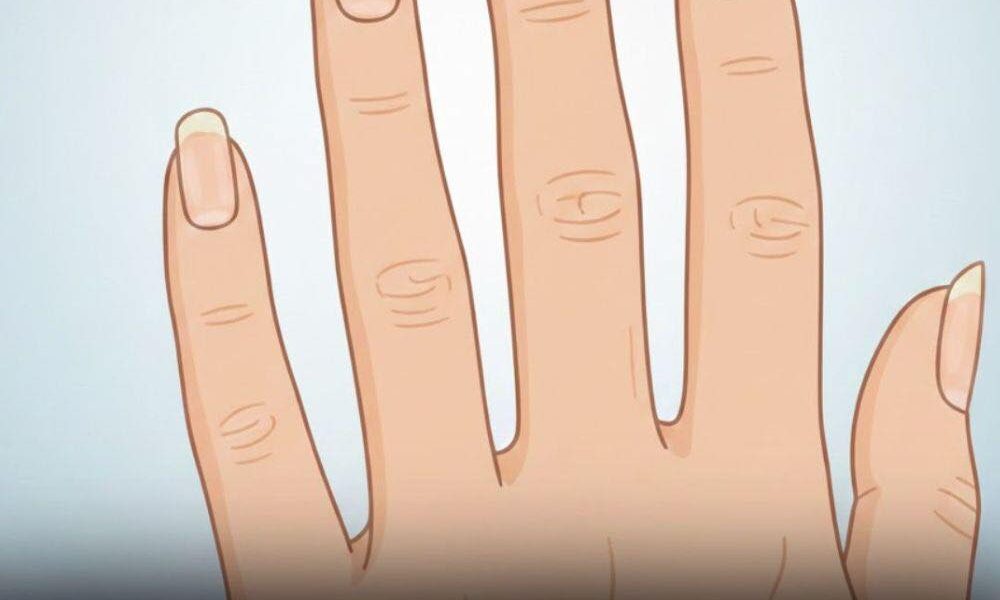


Fingernails do much more than protect the tips of our fingers.
Because nails grow slowly over time, they can sometimes reflect changes occurring elsewhere in the body. While many nail changes are harmless and related to aging, trauma, or cosmetic products, certain persistent changes may deserve medical attention.
It’s important to remember that nails alone cannot diagnose a disease, but they can sometimes provide clues that warrant further evaluation.
1. Pale or Very White Nails
Healthy nails typically have a pinkish appearance because of the blood vessels beneath the nail bed.
If nails become unusually pale or white, possible causes may include:
- Iron deficiency anemia
- Nutritional deficiencies
- Liver disease
- Chronic illness
When to Pay Attention
If pale nails occur together with:
- Fatigue
- Weakness
- Dizziness
- Shortness of breath
it may be worth discussing with a healthcare professional.
2. Yellow Nails
Yellow discoloration is one of the most common nail changes.
Possible causes include:
Fungal Infection
A common reason for nails becoming:
- Yellow
- Thickened
- Brittle
Smoking
Nicotine and tobacco products can stain nails.
Aging
Nails may naturally become slightly more yellow with age.
Less commonly, persistent yellow nails may be associated with certain medical conditions affecting the lungs or lymphatic system.
3. Brittle or Crumbling Nails
Nails that break easily may result from:
- Frequent handwashing
- Exposure to cleaning products
- Aging
- Repeated trauma
Sometimes brittle nails are associated with:
- Iron deficiency
- Thyroid disorders
especially when accompanied by other symptoms.
4. Spoon-Shaped Nails
A nail that curves upward like a spoon is known as:
Next page