

Have you ever wondered why some people seem to gain muscle easily, while others struggle to put on weight no matter how much they eat?
For decades, fitness enthusiasts have used the concepts of ectomorph, mesomorph, and endomorph to describe different body compositions and tendencies. These categories originated from the work of psychologist William Herbert Sheldon in the 1940s.
Today, it’s important to understand that body types are only a simplified model. Most people are actually a combination of multiple body types rather than fitting perfectly into one category.
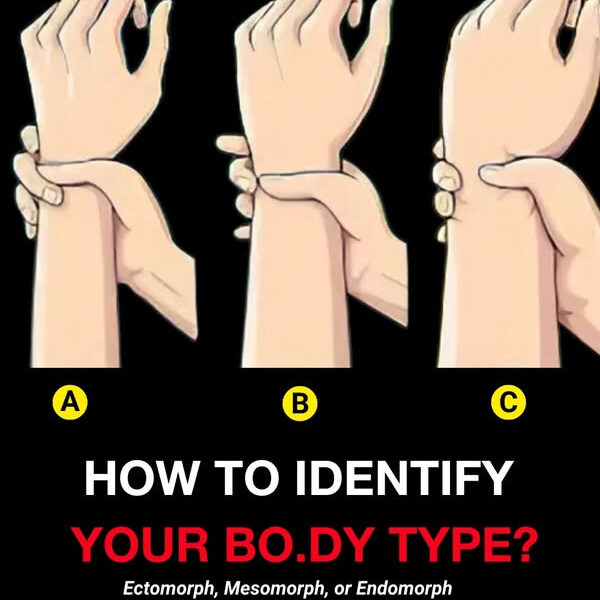
Can You Determine Your Body Type by Wrapping Your Wrist?
A popular internet test suggests:
- If your fingers overlap around your wrist → Ectomorph
- If they just touch → Mesomorph
- If they don’t touch → Endomorph
While wrist size may reflect bone structure to some extent, there is no strong scientific evidence that this simple finger-and-wrist test accurately determines your body type.
It can be a fun exercise, but it should not be considered a medical or scientific assessment.
What Is an Ectomorph?
Common Characteristics
People often described as ectomorphs tend to have:
- Narrow shoulders
- Smaller joints
- Lean appearance
- Lower body fat levels
- Difficulty gaining weight
Strengths
Ectomorphs often:
- Stay lean more easily
- Have good endurance potential
- Accumulate fat more slowly
Challenges
They may find it difficult to:
- Gain muscle mass
- Increase body weight
- Maintain a calorie surplus
Fitness Tips
For those with ectomorph-like traits:
- Prioritize strength training
- Consume adequate protein
- Eat enough calories
- Allow sufficient recovery between workouts
What Is a Mesomorph?
Common Characteristics
Mesomorphs are often described as:
- Naturally athletic
- Broad-shouldered
- Muscular
- Strong frame
- Balanced body composition
Strengths
Mesomorphs may:
- Gain muscle relatively easily
- Respond well to resistance training
- Develop strength efficiently
Challenges
Even naturally athletic individuals can lose fitness if they neglect exercise and nutrition.
Fitness Tips
Mesomorph-like individuals often benefit from:
- Balanced training
- Strength workouts
- Cardiovascular exercise
- Consistent nutrition
What Is an Endomorph?
Common Characteristics
Endomorphs are often associated with:
- Wider frame
- Higher tendency to store fat
- Softer body shape
- Larger bone structure
Strengths
Endomorphs may:
- Build strength effectively
- Gain muscle relatively easily
- Excel in certain power-based sports
Challenges
They may need to pay closer attention to:
- Calorie intake
- Physical activity levels
- Weight management
Fitness Tips
For endomorph-like body compositions:
- Combine strength training with cardio
- Focus on consistent exercise
- Emphasize nutrient-dense foods
- Maintain sustainable habits
Most People Are a Mix
One of the biggest misconceptions about body types is that everyone fits neatly into one category.
In reality, many people are combinations such as:
Ecto-Mesomorph
Lean but capable of building muscle.
Meso-Endomorph
Naturally muscular but gains fat more easily.
Ecto-Endomorph
Less common, with mixed characteristics from both categories.
Human bodies exist on a spectrum rather than inside strict categories.
Genetics Matter, But They Don’t Determine Everything
Your genetics influence:
- Height
- Bone structure
- Muscle-building potential
- Fat distribution
However, lifestyle remains extremely important.
Factors such as:
- Nutrition
- Sleep
- Exercise
- Stress management
often have a greater impact on health and appearance than body type labels.
Why Body Types Are Less Important Than Habits
Modern exercise science places less emphasis on somatotypes than older fitness models did.
Researchers now focus more on:
- Body composition
- Muscle mass
- Strength
- Cardiovascular fitness
- Metabolic health
These factors provide more useful information than simply identifying as an ectomorph, mesomorph, or endomorph.
Common Myths
Myth 1: Ectomorphs Can’t Gain Muscle
False.
They may gain muscle more slowly, but with proper training and nutrition, significant muscle growth is possible.
Myth 2: Endomorphs Can’t Lose Weight
False.
Weight loss depends largely on energy balance, activity levels, and sustainable habits.
Myth 3: Mesomorphs Stay Fit Automatically
False.
Everyone benefits from exercise and healthy eating.
Focus on What You Can Control
Rather than worrying about labels, focus on:
✔ Regular physical activity
✔ Strength training
✔ Adequate protein intake
✔ Quality sleep
✔ Stress management
✔ Consistent healthy habits
These factors influence health far more than body-type categories.
Final Thoughts
The ectomorph, mesomorph, and endomorph model can be a useful way to think about different body tendencies, but it is not a precise scientific classification.
Most people display characteristics from multiple body types, and no category determines what you can or cannot achieve.
Your long-term results depend far more on:
- Training
- Nutrition
- Recovery
- Consistency
than on whether your fingers overlap around your wrist.
The most important body type is the one you learn to understand, care for, and strengthen over time. 💪🏃♀️🥗