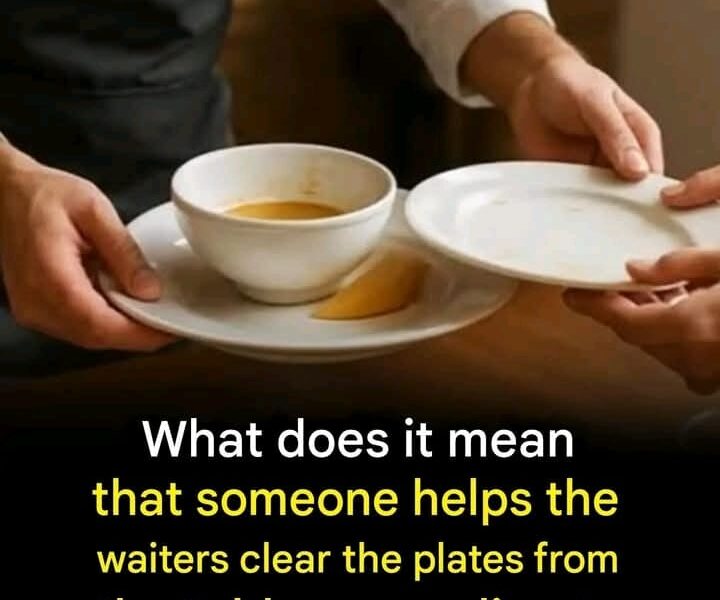


Have you ever noticed someone stacking plates at the end of a meal or handing dishes to a waiter before leaving a restaurant?
It’s a small gesture that many people perform without much thought. Yet psychologists have long been interested in these everyday acts because they can provide insight into how people relate to others.
Of course, no single behavior can fully reveal someone’s personality. Human beings are far too complex for that. However, helping a waiter clear a table may reflect several positive psychological traits.
1. It Often Reflects Empathy
One of the strongest explanations is empathy.
Empathy is the ability to recognize and understand another person’s experience, even when it is not explicitly expressed.
When someone notices that a waiter is:
- Carrying multiple plates
- Working under pressure
- Serving many tables
- Moving quickly throughout the restaurant
they may naturally feel motivated to make the task a little easier.
The gesture itself is small, but it shows awareness of another person’s effort.
Psychologists often consider empathy a core component of emotional intelligence because it allows people to respond appropriately to the needs of others.
2. They Tend to Notice Their Environment
Many people become absorbed in their own conversations, phones, or activities.
Others naturally pay attention to what is happening around them.
People who help clear a table often demonstrate:
- Situational awareness
- Observation skills
- Attention to detail
They notice things that others may overlook.
This doesn’t necessarily make them better people, but it suggests they are paying attention to the environment rather than focusing exclusively on themselves.
3. They Value Cooperation
Helping a waiter is a small form of cooperation.
Rather than viewing service workers as people who simply perform tasks for them, these individuals may see social interactions as collaborative.
They tend to think:
“If I can make this easier, why not?”
This mindset often appears in other areas of life as well, including:
- Work
- Family relationships
- Friendships
- Community activities
Cooperative people generally understand that daily life functions more smoothly when everyone contributes where they can.
4. They Respect Service Workers
Psychologists sometimes note that how people treat individuals in service roles can reveal aspects of character.
This includes:
- Waiters
- Cashiers
- Receptionists
- Drivers
- Cleaning staff
People who show courtesy toward service workers often recognize the dignity of all forms of work.
Helping clear a table may reflect respect rather than superiority.
The gesture communicates:
“I see your effort, and I appreciate it.”
5. They May Have Strong Prosocial Tendencies
In psychology, prosocial behavior refers to actions intended to benefit others.
Examples include:
- Helping
- Sharing
- Volunteering
- Supporting others
Many prosocial behaviors are small and spontaneous.
A person who helps clear dishes may simply have a natural tendency to contribute positively in everyday situations without expecting recognition.
6. They Often Think Beyond Themselves
Small acts of consideration require momentarily shifting attention away from personal needs.
Instead of focusing only on:
- Their meal
- Their conversation
- Their schedule
they briefly consider another person’s experience.
This ability to take another perspective is associated with social awareness and emotional maturity.
But There Are Exceptions
It’s important not to overanalyze one behavior.
Someone might help clear a table because:
- They worked in restaurants before
- They were taught good manners
- It’s customary in their culture
- They simply enjoy being helpful
Likewise, someone who does not help clear the table is not automatically selfish or inconsiderate.
There are many reasons people may choose not to:
- They believe staff prefer handling dishes themselves
- They are following local etiquette
- They simply never think about it
One behavior alone cannot accurately define a person’s character.
The Psychology of Small Gestures
Interestingly, psychologists often find that character is revealed more reliably through repeated small actions than through grand gestures.
Tiny behaviors performed consistently may reflect:
- Habits
- Values
- Social attitudes
- Emotional awareness
Examples include:
- Holding doors open
- Saying thank you
- Returning shopping carts
- Helping someone carry something heavy
- Being polite to workers
These actions rarely attract attention, but they contribute to everyday social harmony.
Emotional Intelligence in Action
Helping a waiter clear a table may also reflect components of emotional intelligence such as:
Self-awareness
Understanding one’s role within a social environment.
Social awareness
Recognizing what others may be experiencing.
Empathy
Responding to another person’s needs.
Relationship management
Creating positive interactions through respect and cooperation.
These skills help strengthen personal and professional relationships.
Why Small Kindness Matters
Research on kindness consistently shows that small acts can have meaningful effects.
For the person receiving help, the gesture may:
- Reduce stress
- Create a positive interaction
- Increase feelings of appreciation
For the person offering help, acts of kindness are often associated with:
- Greater social connection
- Positive emotions
- Increased well-being
In this way, small gestures can benefit everyone involved.
Final Thoughts
When someone helps a waiter clear the table, psychologists would not claim they have uncovered a secret personality trait.
However, the behavior may reflect qualities such as:
- Empathy
- Social awareness
- Cooperation
- Respect for others
- Everyday kindness
Ultimately, what makes the gesture meaningful is not the plates being moved.
It’s the quiet message behind the action:
“I noticed your effort, and I wanted to help.”
Sometimes the smallest acts reveal the most about how people choose to move through the world. 🍽️💛