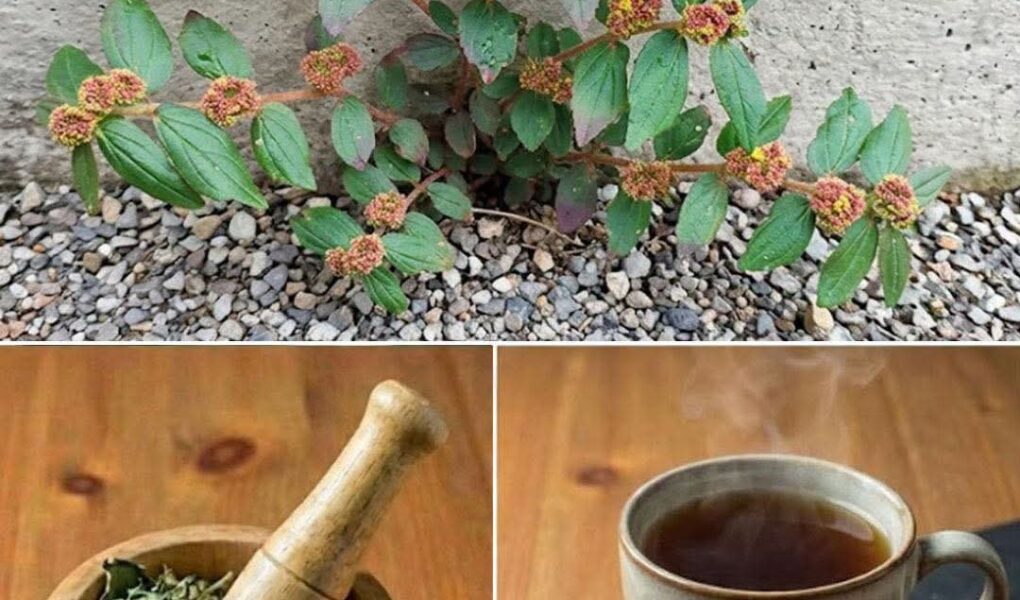
Walk through a tropical field, roadside, or garden, and you may overlook a small, spreading plant with tiny leaves and delicate flowers. To many people, it’s just another weed.
But in many parts of Asia, Africa, and Latin America, this modest herb has been used in traditional medicine for generations.
Known scientifically as Euphorbia hirta, and commonly called the asthma plant, snakeweed, tawa-tawa, or gatas-gatas, it has earned a reputation as one of the most widely used medicinal herbs in folk healing.
Today, researchers continue to study this fascinating plant, while herbal enthusiasts still prepare it as tea, infusions, and topical remedies.
Here’s what Euphorbia hirta is, how it has traditionally been used, and what current scientific evidence tells us.
What Is the Asthma Plant?
Euphorbia hirta is a small flowering plant belonging to the spurge family.
It grows naturally in warm climates throughout:
- Southeast Asia
- India
- The Philippines
- Africa
- Central and South America
- Tropical regions worldwide
The plant usually grows close to the ground with branching stems covered in fine hairs.
Its small oval leaves often display a reddish or purplish stripe along the center, while tiny clustered flowers appear where the leaves meet the stem.
Like many members of the Euphorbia family, the plant produces a white, milky sap when broken.
Why Is It Called the “Asthma Plant”?
The nickname comes from its long history in traditional herbal medicine.
For centuries, communities have used preparations made from Euphorbia hirta to support people experiencing respiratory discomfort.
Traditionally, it has been prepared for conditions such as:
- Coughs
- Wheezing
- Bronchitis
- Mild respiratory irritation
- Asthma symptoms
Some laboratory studies suggest the plant contains compounds that may have anti-inflammatory or smooth muscle–relaxing properties.
However, there is currently insufficient clinical evidence to conclude that Euphorbia hirta can safely or effectively treat asthma.
Anyone with asthma should continue following a treatment plan prescribed by their healthcare provider, as uncontrolled asthma can become life-threatening.
Traditional Herbal Tea
One of the most common traditional preparations is herbal tea.
Across many cultures, people have used the leaves and stems to make a warm infusion.
Historically, this tea has been consumed for a variety of purposes, including general wellness and occasional respiratory discomfort.
While these traditional practices remain culturally significant, scientific research on the tea’s effectiveness in humans remains limited.
Plant Compounds That Interest Researchers
Scientists have identified numerous naturally occurring compounds within Euphorbia hirta, including:
Next page