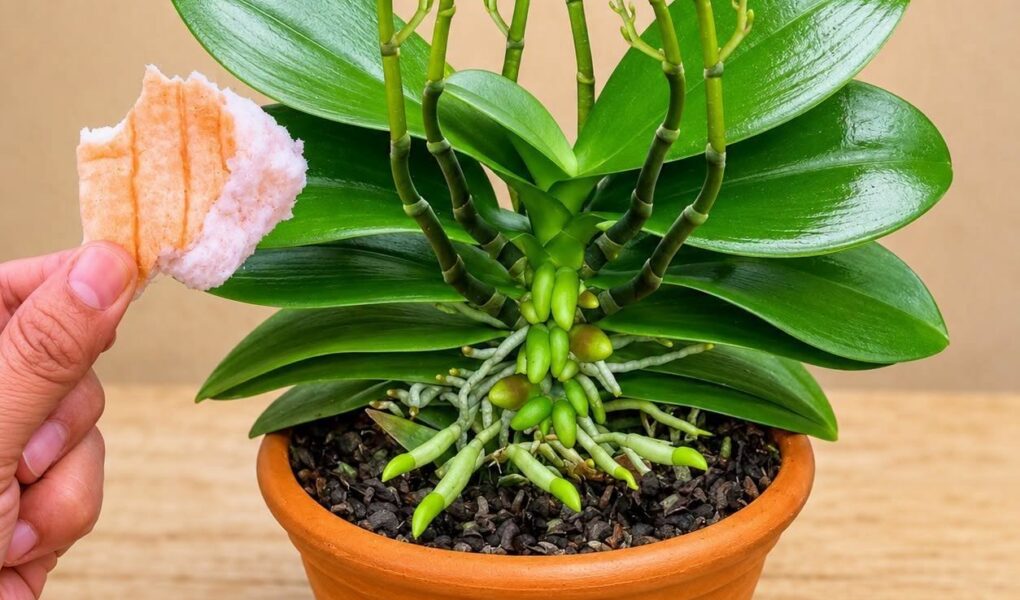
If you’ve spent any time on social media recently, you’ve probably seen headlines like:
“Place one piece under an orchid and 100 new shoots will appear!”
or
“This secret ingredient will make your orchid bloom all year long!”
These claims attract millions of views because every orchid owner dreams of a healthier plant, more flowers, and endless blooming. But is it really possible to trigger hundreds of new shoots and nonstop blooms with a single household ingredient?
Let’s separate gardening facts from online myths.
Is There Really a Miracle Orchid Secret?
The short answer is no.
There is currently no scientifically proven method that can guarantee:
- 100 new shoots
- Continuous flowering 365 days a year
- Instant orchid growth
- Miracle blooming overnight
Orchids are living plants that follow natural growth cycles. Most varieties need periods of rest between blooming seasons. Even the healthiest orchid requires proper care, light, water, and nutrients to flourish.
However, many viral videos are based on ingredients that may offer some nutritional benefits when used correctly.
The Most Common Ingredient: Banana Peel
One of the most popular “orchid hacks” involves placing a small piece of banana peel near the roots or using banana peel water as a fertilizer.
Why bananas?
Banana peels naturally contain nutrients such as:
- Potassium
- Phosphorus
- Calcium
- Magnesium
These nutrients are important for plant growth and flower production.
While banana peels are not a miracle solution, they can be composted or used in homemade plant care routines as part of a balanced fertilization program.
Eggshells Are Another Popular Recommendation
Many online gardening enthusiasts suggest placing crushed eggshells near orchid roots.
Eggshells are rich in calcium, a mineral that helps support plant structure.
Before using eggshells, they should be:
- Cleaned thoroughly.
- Allowed to dry completely.
- Crushed into fine pieces.
Keep in mind that eggshells break down very slowly, so their effects tend to be gradual rather than immediate.
Rice Water: An Old Gardening Favorite
Another frequently mentioned ingredient is rice water.
After rinsing rice, many gardeners collect the leftover water and use it to water plants.
Rice water may contain small amounts of:
- Minerals
- Starches
- Trace nutrients
Some gardeners report healthier growth when using it occasionally. However, excessive use can encourage mold or bacterial growth if the water is allowed to ferment improperly.
Moderation is key.
Coffee Grounds: Use With Caution
Coffee grounds appear in countless gardening videos, but orchid owners should be careful.
While used coffee grounds contain organic matter and nutrients, orchids are very different from many garden plants.
Applying large amounts can:
- Retain excess moisture
- Affect drainage
- Create an unsuitable growing environment
For orchids, proper orchid fertilizer is generally a safer choice.
What Orchids Really Need to Bloom
Instead of searching for miracle ingredients, focus on the essentials.
Healthy orchids thrive when they receive:
1. Bright Indirect Light
Light is one of the most important factors in flowering.
Most orchids prefer:
✅ Bright but indirect sunlight
✅ East-facing windows
✅ Well-lit rooms
Too much direct sun can scorch leaves, while insufficient light often prevents blooming.
2. Proper Watering
Overwatering is one of the most common orchid-care mistakes.
Most orchids prefer:
- Thorough watering
- Good drainage
- Slight drying between waterings
Roots should never sit constantly in water.
3. Adequate Humidity
Orchids naturally grow in humid environments.
Maintaining moderate humidity can help:
- Root development
- Leaf health
- Flower production
Many growers use humidity trays or place orchids in naturally humid rooms.
4. Balanced Fertilization
A specialized orchid fertilizer provides nutrients in the correct proportions.
Many experts recommend:
- Weak fertilizer solutions
- Regular feeding during active growth
- Reduced feeding during dormant periods
Consistent care often produces better results than homemade remedies.
Why Orchids Stop Flowering
Many people believe their orchid is dying when flowers fall off.
In reality, this is completely normal.
An orchid may stop blooming because:
- It is entering a natural resting period.
- It isn’t receiving enough light.
- Temperatures are unsuitable.
- Nutrient levels are inadequate.
- It recently finished a flowering cycle.
Patience is often part of successful orchid care.
The Truth About Viral Gardening Claims
Headlines promising “100 new shoots” are designed to attract attention.
In reality:
✅ Some household ingredients can provide nutrients.
✅ Proper care encourages healthier growth.
✅ Orchids benefit from balanced fertilization.
❌ No ingredient guarantees hundreds of new shoots.
❌ No trick will force continuous flowering all year.
❌ Natural growth cycles cannot be eliminated.
The Secret Is Consistency
Experienced growers know that beautiful orchids rarely result from miracle hacks.
The real secret is:
- Proper lighting
- Correct watering
- Good airflow
- Regular fertilization
- Patience
When these basic needs are met, orchids often reward their owners with stunning blooms and healthy growth year after year.
What About You?
🌸 Option 1: My orchid blooms every year.
🌸 Option 2: It blooms occasionally.
🌸 Option 3: I struggle to keep orchids alive!
Share your answer in the comments and tell us your favorite orchid-care tip! 👇🌿✨