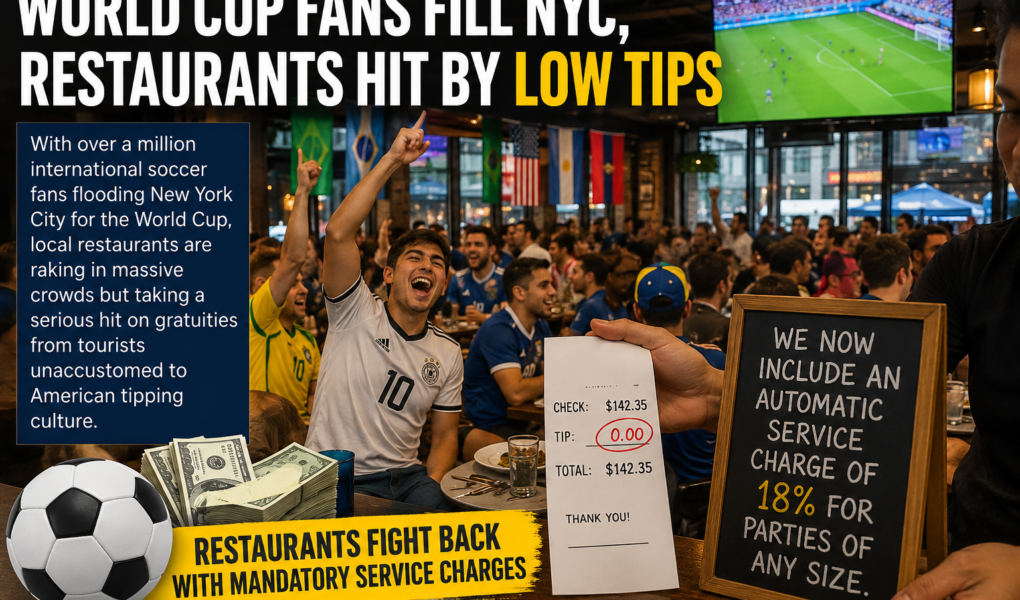
As the FIFA World Cup brings millions of soccer fans from around the globe to New York City, local restaurants are experiencing a surge unlike anything seen in years. Dining rooms are packed, reservation books are full, and wait times stretch around city blocks. For many restaurant owners, the tournament has created a financial windfall.
But behind the scenes, another story is unfolding.
While sales are soaring, many restaurant workers say they are earning significantly less in tips than expected. The reason? A large number of international visitors come from countries where tipping customs differ dramatically from those in the United States.
The situation has become so widespread that some restaurants are introducing mandatory service charges to protect staff income during one of the busiest tourism periods in recent memory.
A City Overflowing With Soccer Fans
The World Cup has transformed New York into a global gathering place. Fans wearing jerseys from dozens of countries fill subway cars, public squares, sports bars, hotels, and restaurants from Manhattan to Queens.
For restaurant owners, the influx of visitors has been a dream scenario.
Many establishments report:
- Record-breaking daily sales
- Full dining rooms from morning until late at night
- Increased spending on food and beverages
- Higher demand for group dining and celebrations
- Significant boosts in tourist-heavy neighborhoods
Some restaurants have seen business increase by 30% to 50% compared to typical summer weeks.
At first glance, it seems like everyone in the hospitality industry should be benefiting.
However, servers tell a more complicated story.
The Tipping Culture Gap
In the United States, tipping is deeply integrated into restaurant culture.
Customers typically leave:
- 15% to 20% for standard service
- 20% or more for exceptional service
- Additional gratuities for large parties
Many restaurant employees rely on these tips as a substantial portion of their income.
In many other countries, however, tipping works very differently.
Visitors arriving from Europe, Asia, South America, Africa, and the Middle East may come from places where:
- Service charges are already included in bills
- Tipping is uncommon
- Small rounding-up gestures are considered sufficient
- Restaurant workers receive higher base wages
As a result, some international tourists unknowingly leave little or no gratuity after receiving service in American restaurants.
Many visitors are not attempting to be rude. They simply follow the customs they know from home.
Unfortunately, servers still feel the impact.
Restaurant Workers Feel the Pressure
Several restaurant employees describe a surprising reality:
The restaurant may be busier than ever, yet their earnings are not keeping pace with the crowds.
A server working double shifts during tournament weekends may handle dozens of additional tables while receiving significantly lower average gratuities than usual.
Many workers say they frequently encounter situations where:
- Large groups leave no tip
- Customers assume service is included
- Visitors misunderstand local customs
- Bills worth hundreds of dollars generate minimal gratuities
For staff members already facing high living costs in New York City, the difference can be substantial.
A night that would normally produce strong earnings can become disappointing despite serving more guests than usual.
Why Automatic Service Charges Are Becoming Popular
To address the issue, some restaurants have begun adding automatic service fees to customer bills.
These charges generally range from:
- 15%
- 18%
- 20%
- Sometimes higher for large parties
The fee appears directly on the check and is collected regardless of whether customers choose to leave an additional tip.
Restaurant owners argue that the measure helps create fairness for employees who are working long hours during the World Cup rush.
Many businesses view the service charge as a practical solution rather than a punishment.
Their reasoning is simple:
If visitors are unfamiliar with American tipping expectations, a mandatory charge ensures staff are compensated consistently.
Not Everyone Supports the Change
The policy has sparked debate among both tourists and local diners.
Supporters argue that:
- Restaurant employees deserve predictable income
- Visitors should contribute fairly to service costs
- Service charges eliminate confusion
- Workers should not suffer because of cultural misunderstandings
Critics, however, believe mandatory fees remove customer choice.
Some diners say they prefer deciding how much to tip based on service quality rather than paying a fixed charge.
Others worry that adding unexpected fees can create frustration for tourists already navigating unfamiliar customs and currencies.
The debate reflects a larger conversation about how hospitality workers should be compensated in the United States.
The Bigger Question: Should Tipping Remain the Norm?
Next page