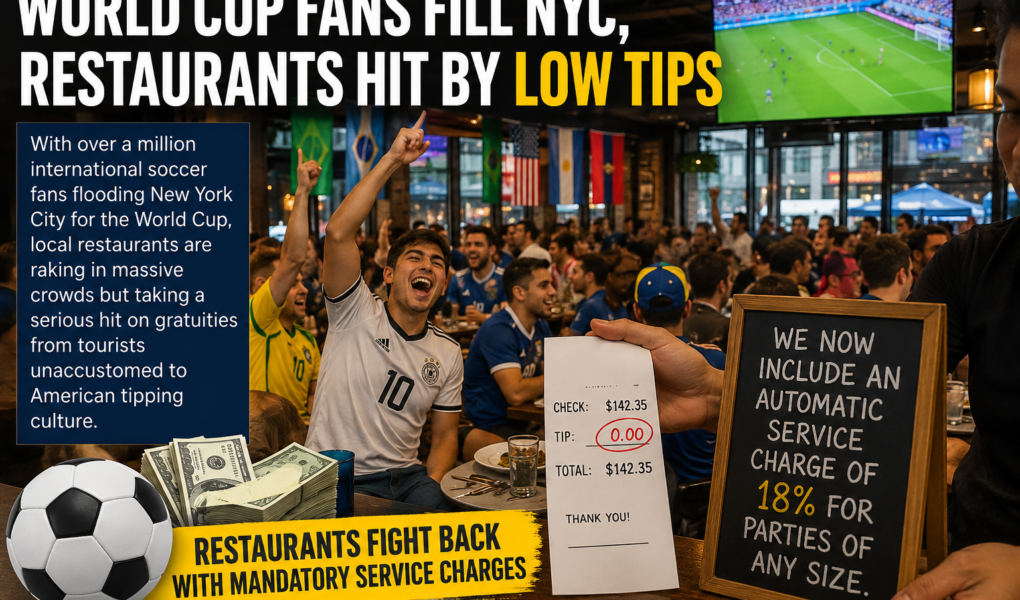
The World Cup tipping controversy has reignited discussions that have existed for years.
Many critics of the current system argue that restaurant workers should receive higher guaranteed wages rather than relying heavily on gratuities.
Supporters of tipping counter that:
- Strong servers can earn significantly more through tips
- Customers reward excellent service directly
- The system has become deeply rooted in American dining culture
Countries around the world have adopted different approaches.
Some nations include service charges automatically.
Others prohibit tipping altogether.
Some leave gratuities entirely optional.
The World Cup has created a unique situation where all of these cultures are suddenly interacting within the same city.
A Learning Experience for Visitors
Many restaurants are responding by educating guests rather than criticizing them.
Some establishments now:
- Include tipping explanations on menus
- Add notices to receipts
- Display signs explaining local customs
- Train staff to answer questions politely
Restaurant owners recognize that most visitors are not intentionally avoiding gratuities.
Instead, many simply do not realize how heavily American service workers depend on tips.
For tourists unfamiliar with U.S. dining practices, a brief explanation often resolves the issue.
Many visitors willingly adjust once they understand the expectations.
Economic Impact Beyond Restaurants
The tipping challenge highlights a broader economic effect of international tourism.
When millions of travelers arrive in a city, they bring not only spending power but also cultural habits and expectations.
Hotels, transportation providers, tour operators, and restaurants must often adapt to visitors from dozens of different backgrounds.
The World Cup has become a real-world example of how global events create both opportunities and challenges for local businesses.
While revenue may increase dramatically, customer behavior can change in ways businesses did not anticipate.
What Happens After the Tournament?
Many restaurant owners expect the issue to ease once the World Cup concludes and tourist numbers return to normal levels.
However, some industry experts believe automatic service charges may remain even after the tournament ends.
Businesses that adopt the model may discover benefits such as:
- More predictable staff earnings
- Reduced disputes about tipping
- Greater transparency
- Simplified billing
If customers accept the change, service charges could become more common across major tourist destinations.
The coming months may reveal whether these policies are a temporary response to World Cup crowds or part of a longer-term shift in American dining.
A Global Event Meets a Local Tradition
The World Cup is bringing excitement, energy, and economic activity to New York City on an enormous scale.
Restaurants are serving visitors from every corner of the world, creating unforgettable experiences and generating record revenues.
Yet the tournament is also exposing an often-overlooked reality: customs that seem obvious to locals may be completely unfamiliar to international guests.
As packed dining rooms continue to buzz with conversations in dozens of languages, restaurants are searching for ways to balance hospitality, fairness, and cultural differences.
For many workers, the goal is simple: ensuring that one of the busiest moments in the city’s history is also one of the most rewarding.
Whether through education, automatic service charges, or evolving industry practices, New York’s restaurant scene is adapting in real time to the challenges of hosting the world’s biggest sporting event.