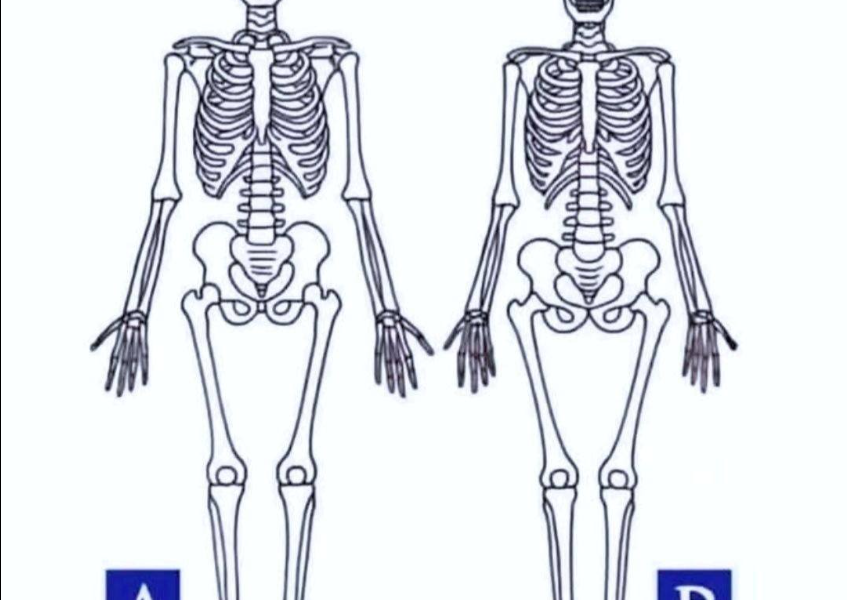
- Hair length
- Clothing style
- Makeup
- Height
- Voice
- Facial structure
do not reliably indicate a person’s gender.
People express themselves in many different ways, and appearance alone cannot tell you how someone identifies.
That’s why guessing another person’s gender based only on an image can easily lead to incorrect assumptions.
Why People See Different Answers
If you’ve ever looked at one of these viral comparisons, you may have noticed something interesting.
Two people can examine the exact same image and arrive at completely different conclusions.
That’s because everyone notices different details.
Some focus on:
- Clothing
- Hairstyles
- Body posture
- Facial expressions
- Accessories
Others pay attention to completely different characteristics.
Our experiences influence which visual details stand out first.
The Role of Stereotypes
Much of what people think they recognize actually comes from learned stereotypes.
For example, many cultures have traditionally associated certain features with masculinity or femininity.
These associations vary widely across:
- Countries
- Historical periods
- Fashion trends
- Cultural traditions
A hairstyle considered masculine in one era may be viewed as feminine in another.
Clothing styles have changed dramatically throughout history as well.
This demonstrates that appearance is heavily influenced by culture rather than universal rules.
Optical Assumptions
Visual puzzles often exploit our tendency to fill in missing information.
When details are limited, our brains naturally create explanations.
This process is called top-down processing.
Instead of analyzing every detail objectively, we interpret new information using previous experiences.
It’s an efficient system—but not always an accurate one.
First Impressions Can Be Wrong
Research has shown that people often form impressions within seconds of meeting someone.
These impressions may include assumptions about:
- Personality
- Confidence
- Friendliness
- Age
- Occupation
However, first impressions are not always reliable.
As we learn more about someone, our initial assumptions frequently change.
This reminds us that appearance represents only a tiny fraction of who a person truly is.
Why Online Challenges Feel Convincing
Many viral posts suggest that your answer reveals something profound about your personality.
For example, they may claim:
- You’re highly intuitive.
- You think logically.
- You’re emotionally intelligent.
- You’re exceptionally observant.
These statements usually sound believable because they’re broad enough to apply to many people.
Psychologists sometimes refer to this as the Barnum effect—our tendency to recognize ourselves in general descriptions.
It doesn’t mean the quiz has accurately measured anything.
The Importance of Respecting Identity
Identity is personal.
The way someone looks does not necessarily reflect how they identify.
Rather than making assumptions based on appearance, it’s more respectful to allow people to describe themselves in their own words if and when they choose.
This approach avoids misunderstandings and recognizes that appearance alone cannot tell someone’s story.
What This Puzzle Really Tests
If the image tests anything, it isn’t your ability to identify gender.
Instead, it highlights how quickly our brains:
- Notice visual patterns.
- Apply previous experiences.
- Make predictions with incomplete information.
- Feel confident about uncertain conclusions.
In that sense, the puzzle becomes an interesting demonstration of perception rather than identity.
Why Discussions Become So Heated
Posts like this often generate thousands of comments because people naturally trust their own observations.
When someone reaches a different conclusion, it can feel surprising.
Yet both people are usually relying on the same visual information.
They’re simply interpreting it differently.
This illustrates how perception is influenced by experience rather than objective certainty.
Looking Beyond Appearances
Throughout history, countless people have challenged expectations about how men and women “should” look.
Fashion, hairstyles, occupations, and personal expression have changed dramatically over time.
Many styles once associated with one gender later became common for another.
These shifts remind us that cultural expectations evolve continuously.
What seems obvious today may look completely different to future generations.
The Bigger Lesson
The most valuable takeaway from this viral image isn’t identifying a “correct” answer.
It’s recognizing how easily we form assumptions based on limited information.
A single photograph captures only one moment.
It cannot reveal a person’s experiences, personality, beliefs, values, or identity.
Real understanding comes through conversation, respect, and getting to know someone—not through instant visual judgments.
Final Thoughts
The question, “Which one is a woman?”, may seem like a simple visual challenge, but it doesn’t have a reliable answer based solely on appearance.
Images alone cannot determine a person’s gender or identity, and our first impressions are often shaped by cultural expectations and personal assumptions.
Rather than revealing hidden truths about the people in the picture, challenges like this reveal something about human perception: we naturally search for patterns, make quick judgments, and sometimes become far more confident than the available evidence justifies.
In the end, the image serves as an interesting reminder that appearances can be misleading—and that understanding people requires much more than a quick glance.