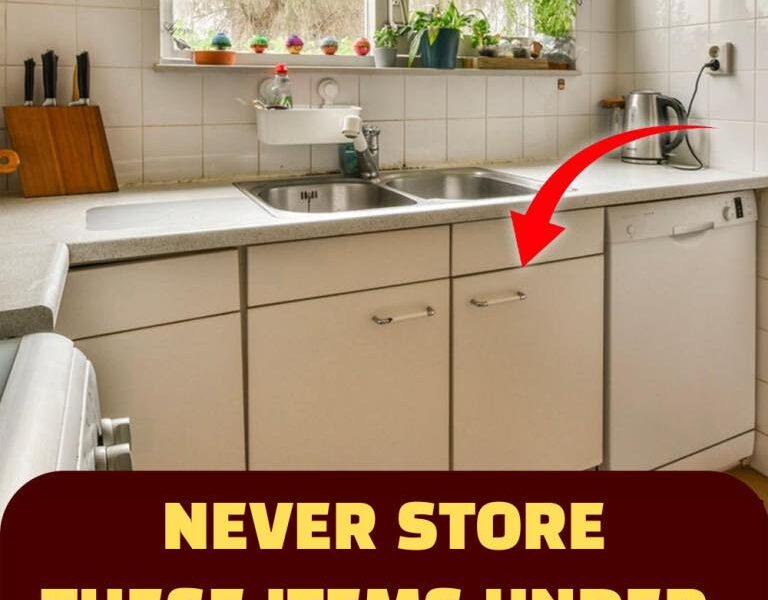
- Potatoes
- Onions
- Pet food
- Flour
- Rice
- Canned goods
Why?
Under-sink cabinets may expose food to:
- Moisture
- Cleaning chemical fumes
- Pests
- Temperature fluctuations
A dedicated pantry or dry cabinet is typically safer.
5. Harsh Chemicals Mixed Together
Many households keep cleaning products under the sink, which is usually acceptable if done safely.
The problem occurs when incompatible chemicals are stored carelessly or allowed to leak.
Be Especially Careful With:
- Bleach
- Ammonia-based cleaners
- Drain cleaners
- Strong solvents
Why?
Accidental mixing of certain chemicals can create dangerous fumes.
Always keep products:
- In original containers
- Tightly sealed
- Upright
- Out of reach of children and pets
Other Items Best Stored Elsewhere
Tools That Rust Easily
Humidity can accelerate corrosion.
Valuable Items
The risk of unnoticed leaks makes under-sink storage a poor choice for anything valuable.
Medicines
Bathrooms and kitchen sink cabinets are generally not ideal locations for medications because moisture and temperature changes can affect them.
What Is Safe to Store Under the Sink?
Items commonly stored there include:
✔ Cleaning products (properly sealed)
✔ Trash bags
✔ Rubber gloves
✔ Cleaning brushes
✔ Empty spray bottles
✔ Dishwasher supplies
Using waterproof bins can provide additional protection.
Signs Your Under-Sink Area Has Too Much Moisture
Watch for:
- Musty odors
- Water stains
- Warped shelves
- Mold spots
- Rust on metal items
If you notice any of these, inspect the plumbing for leaks.
Easy Organization Tips
Use Plastic Containers
Plastic bins help contain spills and protect stored items.
Check Pipes Regularly
Inspect connections every few months for signs of moisture.
Improve Ventilation
Leaving cabinet doors open occasionally after cleaning can help reduce humidity.
Keep Frequently Used Items Accessible
Store the most-used cleaning products near the front.
Final Thoughts
The space beneath your kitchen sink may seem convenient, but it’s not ideal for everything.
The items most commonly damaged there include:
1️⃣ Paper and cardboard products
2️⃣ Small electrical appliances
3️⃣ Dishcloths and sponges
4️⃣ Food items
5️⃣ Improperly stored chemicals
The safest approach is to reserve this area mainly for cleaning supplies and other moisture-resistant household items.
A few simple storage adjustments can help prevent damage, reduce clutter, and keep your kitchen safer and more organized. 🏠✨🧽