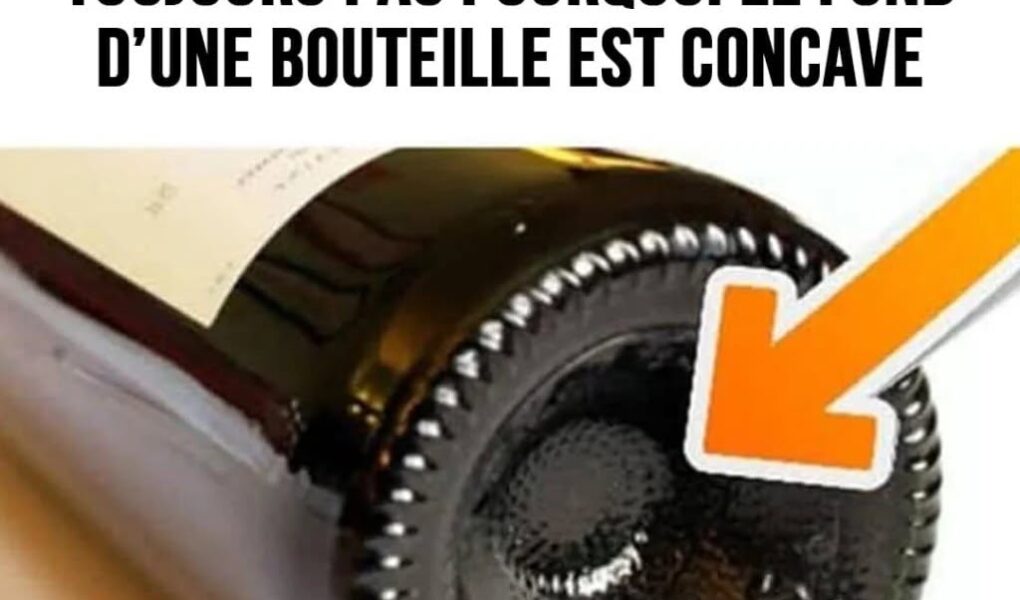
Have you ever looked at the bottom of a wine bottle and wondered why there’s a deep indentation in the center? Most people barely notice it, while others assume it’s simply a design choice. However, this distinctive feature, known as a punt, has fascinated wine lovers and curious consumers for generations.
Far from being a random detail, the concave bottom of a bottle has a long history and has served several practical purposes over the centuries. From transportation and manufacturing to wine quality and presentation, this small feature hides a surprisingly interesting story.
A Clever Innovation for Transporting Bottles
Centuries ago, transporting wine safely was far more difficult than it is today.
Roads were rough, vehicles were basic, and glass bottles were much more fragile. During long journeys, bottles were exposed to constant vibrations and impacts, increasing the risk of breakage.
The concave bottom offered an ingenious solution.
When bottles were stored together, the neck of one bottle could fit more securely against the base of another, helping improve stability during transport. This arrangement reduced movement and made large shipments easier to handle.
At a time when every bottle represented valuable merchandise, minimizing breakage was extremely important.
A Practical Solution for Wine Sediment
Modern winemaking techniques use advanced filtration systems, but this wasn’t always the case.
In the past, wines often contained natural sediments, including yeast particles and other residues that settled at the bottom of the bottle over time.
The concave base helped address this issue.
By creating a circular area around the indentation, sediment could collect near the edges of the bottle rather than spreading throughout the wine. This made it easier to pour clearer wine into a glass while leaving most of the sediment behind.
For wine producers and consumers alike, this was a simple yet effective way to improve the drinking experience.
A Stronger Bottle Design
The earliest glass bottles were handmade using glass-blowing techniques.
Creating a perfectly flat and stable base was difficult and often resulted in weak points within the glass. Manufacturers discovered that pushing the bottom inward created a more durable structure.
The curved shape helped distribute pressure more evenly throughout the bottle, reducing the likelihood of breakage.
This was particularly important for sparkling wines and champagne, which contain internal pressure created by carbon dioxide. The reinforced structure provided by the punt helped bottles withstand that pressure more effectively.
Today, many sparkling wine bottles still feature deep concave bottoms for this reason.
A Sign of Tradition and Craftsmanship
Over time, the concave bottom became associated with quality wine bottles.
Although modern manufacturing techniques no longer require a punt for structural reasons in many cases, producers continue to use it because of tradition and appearance.
The feature adds a sense of elegance and craftsmanship that consumers often associate with premium wines.
For many wineries, maintaining this classic design helps preserve a connection with centuries of winemaking history.
It Also Improves Serving
Wine professionals often appreciate another practical advantage.
The punt allows servers to hold a bottle more securely when pouring. By placing a thumb inside the indentation and supporting the bottle underneath, they can achieve better control and a more elegant presentation.
This serving technique is particularly common in restaurants, fine dining establishments, and formal events.
Does a Deeper Punt Mean Better Wine?
A common myth suggests that the deeper the indentation, the higher the quality of the wine.
In reality, this is not necessarily true.
While many premium wines use bottles with deep punts, bottle shape alone does not determine the quality of what’s inside. The depth of the punt is often a design preference chosen by the winery rather than a reliable indicator of excellence.
Excellent wines and ordinary wines can both be found in bottles with similar shapes.
An Interesting Detail That Survived Centuries
What began as a practical solution for transportation, sediment management, and glass production has become one of the most recognizable features of wine bottles.
Even though modern technology has made many of its original functions less essential, the concave bottom remains a symbol of tradition, craftsmanship, and wine culture.
The next time you hold a bottle of wine, take a moment to look at its base. That small indentation is more than a design feature. It’s the result of centuries of innovation, problem-solving, and winemaking history.
What Did You Think the Concave Bottom Was For?
🍷 Option 1: I thought it was purely decorative.
🍷 Option 2: I knew it helped with wine sediment.
🍷 Option 3: I had no idea and learned something new today!
Share your answer in the comments and let us know if you’ve ever wondered about this fascinating bottle mystery! 👇🍾✨